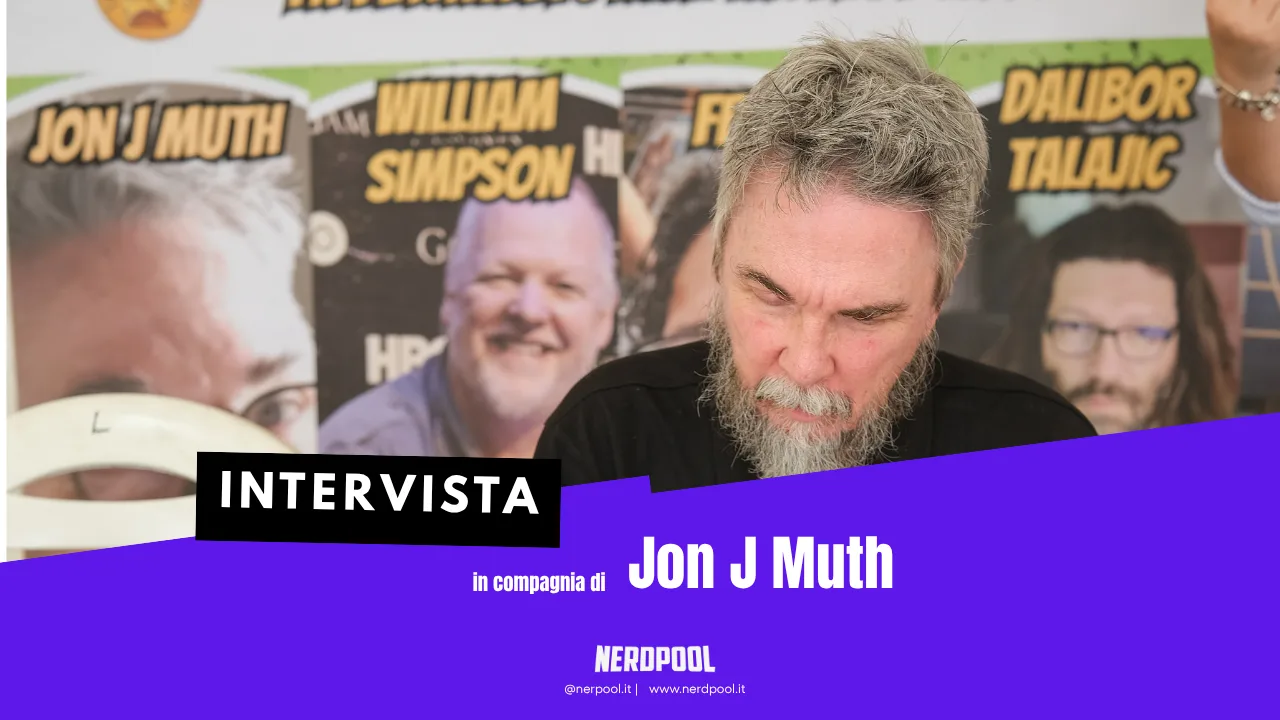
Il talento di Jon J. Muth non è fatto per gridare, è fatto per sedimentarsi nell’animo del lettore. Maestro indiscusso del fumetto americano, noto per aver ridefinito il potenziale espressivo dell’acquerello attraverso opere capitali come Moonshadow e le sue celebri collaborazioni su The Sandman, Muth rappresenta un punto di riferimento imprescindibile per chiunque intenda il fumetto come una forma d’arte totale.
In occasione della ventunesima edizione del Lanciano nel Fumetto, che ha consacrato il Parco Villa delle Rose con 30.000 presenze, abbiamo avuto l’onore di accogliere il Maestro nella nostra Artist Alley. In qualità di Main Media Partner dell’evento, NerdPool.it ha ottenuto in esclusiva questa intervista,una conversazione che prosegue ed espande i temi già trattati nel nostro precedente articolo di presentazione dell’artista.
Questa intervista, rappresenta una delle tappe fondamentali del nostro racconto editoriale di Lanciano nel Fumetto 2026; un viaggio intimo nella poetica di un autore che, ha scelto di condividere la propria visione con i lettori di NerdPool.it, confermando lo spessore culturale raggiunto dalla fiera in questa edizione da record.
INTERVISTA COMPLETA A JON J. MUTH
È un vero piacere averti qui a Lanciano nel Fumetto 2026, Io sono Sara Di Giacinto, Direttrice dell’ufficio stampa di questa fiera e sono qui anche in rappresentanza di NerdPool.it, che è il Main Media Partner dell’evento e il sito per cui scrivo. Siamo un punto di riferimento in Italia per la cultura pop e i nostri lettori amano profondamente il tuo approccio unico all’illustrazione. Ti ringraziamo davvero per il tempo che ci stai dedicando per questa intervista esclusiva.
It is a true pleasure to have you here at Lanciano nel Fumetto 2026. My name is Sara Di Giacinto; I am the Press Office Director of this festival, and I am also here representing NerdPool.it which is the event’s Main Media Partner the outlet I write for. We are a key reference point in Italy for pop culture, and our readers truly love your unique approach to illustration. Thank you so much for the time you are dedicating to us for this exclusive interview.
Il tuo stile ha portato nel fumetto mainstream una
delicatezza rara. In un’opera come The Sandman,
dove il sogno è protagonista, come sei riuscito a
usare l’acquerello per rendere ‘tangibile’ l’astratto?
“Beh, Sandman è stato realizzato in realtà a inchiostro. Quindi, ho usato l’inchiostro e un grande pennello giapponese, o cinese, che in realtà posso mostrarti. Ma la colorazione è stata fatta in seguito, ed è stata fatta al computer per Sandman, parlo di Sandman nello specifico. Ma sì, ho lavorato con pennelli come questi, non so se riesci a vederli, questi sono il tipo di pennelli che ho usato per fare… per fare Sandman. Quindi, non so se questo stia centrando una risposta alla tua domanda.”
Your style has brought a rare delicacy to mainstream comics. In a work like The Sandman, where dreams are the main character, how did you manage to use watercolors to make the abstract feel ‘tangible’?
“Well, Sandman was actually done with ink. So, I used ink and a large Japanese, or Chinese brush, which I can show you actually. But the coloring was done afterwards, and it was done on the computer for Sandman, I’m talking about Sandman specifically. But yes, I worked with brushes like these, I don’t know if you can see them, these are the kind of brushes I used to do… to do Sandman. So, I don’t know if that’s honing in on an answer for your question.”
Guardando indietro a un’opera cult come Moonshadow, come credi sia cambiato il tuo modo di raccontare l’innocenza e il percorso di crescita di un personaggio attraverso le sole immagini?
“Beh, ho realizzato Moonshadow quando ero molto, relativamente giovane. Quindi, è stata la mia prima incursione nel realizzare un fumetto mensile, o un fumetto bimestrale. E così, l’idea era quella di un vecchio che ripensa alla sua vita. Quindi, volevo creare immagini che fossero come i suoi ricordi. E sai, quando ricordi qualcuno, a volte i tuoi amici possono essere molto divertenti, quindi pensi a loro come a un cartone animato, oppure puoi pensare a qualcuno come magari molto poetico, quindi diventano un tipo diverso di immagine. Quindi, non… non conservo i ricordi allo stesso modo per tutti. Quindi, l’idea era quella di guardare indietro alla sua vita e presentarla nel modo in cui lui potrebbe aver ricordato le persone. E a volte erano divertenti, a volte erano tristi, a volte erano poetiche, a volte erano… arrabbiate, sai. E così, ho cercato di usare molti tipi diversi di tecniche pittoriche e tecniche di disegno per far emergere tutto questo.”
Looking back at a cult classic like Moonshadow, how do you think your way of telling the story of innocence and personal growth through images alone has changed over time?
“Well, I did Moonshadow when I was very, relatively young. And so, it was my first foray into making a monthly comic book, or a bimonthly comic book. And so, the idea was, it was an old man thinking back on his life. So, I wanted to make images that would be like his memories. And you know, when you remember someone, sometimes your friends might be very humorous, so you think of them as like a cartoon, or you may think of someone as maybe very poetic, so they become a different kind of image. So, I don’t… I don’t keep memories the same way for everybody. So, the idea was to look back on his life and present it the way he might have remembered people. And sometimes they were funny, sometimes they were sad, sometimes they were poetic, sometimes they were… angry, you know. And so, I tried to use many different types of painting techniques and drawing techniques to bring that out.”
Siamo a Lanciano nel Fumetto 2026. Per un artista che solitamente lavora chiuso nel suo studio, cosa rappresenta per te l’opportunità di confrontarti direttamente con il pubblico e con i fan italiani in un contesto così intimo e curato?
“È… è… è adorabile. È davvero adorabile perché, ehm, come dici tu, sono nel mio studio e sto realizzando… sto realizzando opere, ed è come mandare un messaggio in una bottiglia che invii nel mondo. E sai, in realtà, potresti ricevere risposte dagli editori, e a volte ricevi risposte dal pubblico, ma questa è un’opportunità per ascoltare direttamente le persone che sono state toccate dalle opere, da… da tutte le nostre opere, direttamente, ed è… ed è semplicemente, è molto commovente sentire cosa le opere hanno significato per le persone nel corso del tempo.”
We are here at Lanciano nel Fumetto 2026. For an artist who usually works inside their studio, what does it mean to you to have the opportunity to engage directly with the public and your Italian fans in such an intimate and curated setting?
“It’s it’s it’s lovely. It’s really lovely because, um, like you say, I’m in my studio and I’m making… I’m making work, and it’s like sending out a message in a bottle and you send it out into the world. And you know, actually, you might hear back from editors, and sometimes you hear back from the audience, but this is a chance to hear directly from people who have been moved by work, by by all of our work, directly, and it and it’s it’s just, it’s very heartwarming to to hear what the work has meant to people over time.”
Jon, grazie mille. Questa conversazione è stata davvero speciale e i nostri lettori la apprezzeranno molto. Grazie per la tua gentilezza.
Jon, thank you so much. This conversation has been truly special, and our readers will appreciate it a lot. Thank you for your kindness.